YouTube Thumbnail Psychology 2026: The Science of the Click
Discover the neurobiology and design secrets behind high-CTR YouTube thumbnails in 2026. Learn how to beat AI-slop fatigue and master the "Curiosity Gap" to grow your channel.
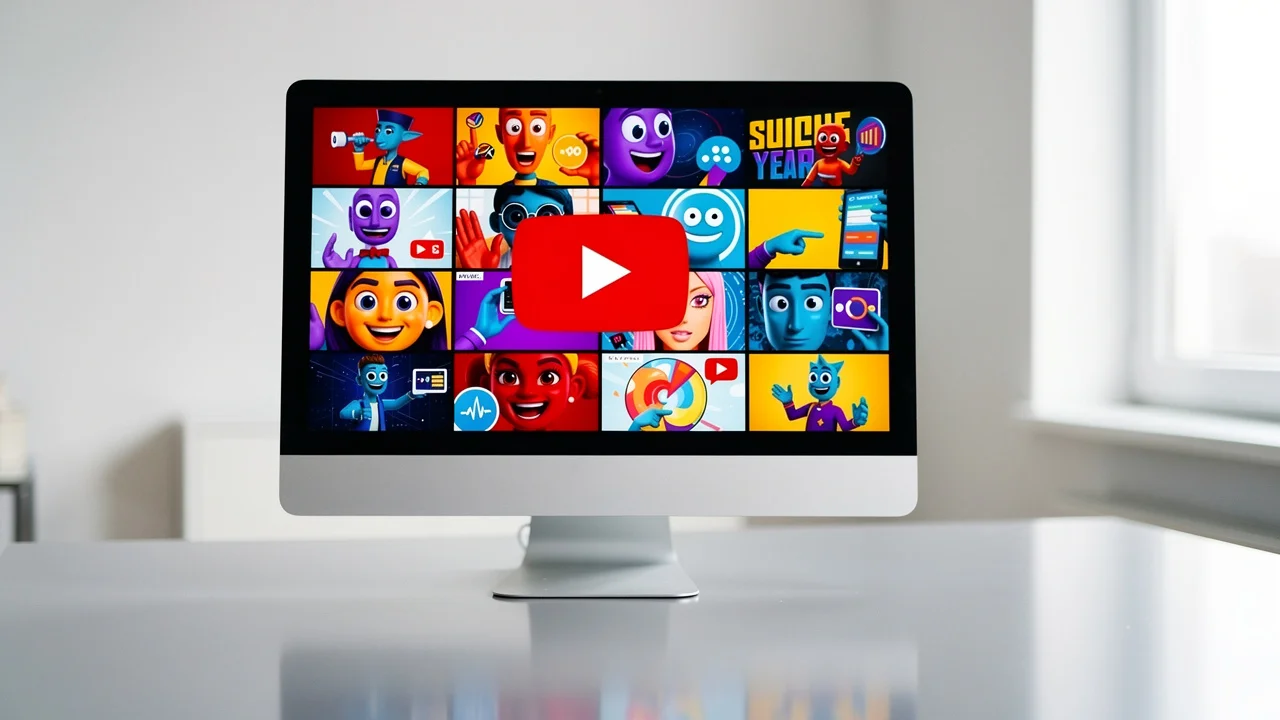
YouTube Thumbnail Psychology: What Gets Clicks in 2026
In the split-second economy of 2026, a YouTube thumbnail isn't just a graphic—it’s a psychological gateway. With over 500 hours of content uploaded every minute and the rise of AI-curated feeds, the battle for the "click" has moved beyond simple aesthetics. Today, winning the click-through rate (CTR) game requires a deep understanding of neurobiology, visual hierarchy, and the evolving landscape of "AI-slop" fatigue.
If you want to grow in 2026, you must stop designing for what looks "cool" and start designing for how the human brain processes information. Here is the definitive guide to YouTube thumbnail psychology in 2026.
1. The Neurobiology of the "Micro-Decision"
In 2026, the average user spends less than 180 milliseconds looking at a thumbnail before deciding to scroll or click. This is a subconscious process governed by the amygdala—the part of the brain responsible for processing emotions and threats.
The Survival Mechanism
The human brain is hardwired to prioritize three things: faces, threats, and novelty.
- Faces: We are biologically programmed to look for eyes and facial expressions to gauge intent. In 2026, the "MrBeast Face" (extreme shock) has evolved. Audiences now crave authentic vulnerability. A face showing subtle, genuine intrigue or a "knowing smirk" often outperforms the exaggerated screams of the early 2020s.
- Novelty (The Pattern Interrupt): If every thumbnail in a niche uses bright red borders, the brain begins to filter them out. This is known as sensory adaptation. To get clicks in 2026, you must "zig when they zag." If your competitors are loud and saturated, a minimalist, high-contrast black-and-white thumbnail acts as a visual reset, forcing the eye to stop.
2. Color Theory: Moving Beyond "Bright is Better"
While neon colors were the gold standard of 2024, the 2026 aesthetic has shifted toward Luminance Contrast and Psychological Prime Colors.
The Saturated Fatigue
Viewers are increasingly suffering from "Saturate Burnout." Over-processed, neon-soaked thumbnails are now subconsciously associated with "low-effort AI content" or "clickbait."
The 2026 Color Palette
- Hyper-Contrast (Luminance): Instead of just using bright colors, creators are using light-to-dark ratios. A deep charcoal background with a single, glowing element creates a "spotlight effect" that mimics how we see in the physical world.
- The "Trust" Palette: For educational or long-form content, Midnight Blue and Forest Green have seen a resurgence. These colors lower the heart rate and signal "authority" and "calm," which is essential for viewers looking for deep-dive content amidst the chaos of Shorts.
- Urgency without Red: Red still signals danger/urgency, but Electric Orange is the 2026 winner for high-energy clicks. It feels modern, energetic, and less aggressive than pure red.
3. The "Curiosity Gap" vs. The "Value Promise"
Psychology tells us that humans hate unresolved loops. This is the Zeigarnik Effect: the brain’s tendency to remember uncompleted tasks or unanswered questions.
The 2026 Curiosity Loop
In 2026, the best thumbnails don't tell the whole story; they present a visual mystery that can only be solved by clicking.
- The "Incomplete" Visual: Showing a product that is 90% finished, or a "Before" image where the "After" is partially obscured by a blur or a hand, triggers a physical need to see the resolution.
- The Prop as a Character: Objects are being used as psychological anchors. A "weird" or "out of place" object in a mundane setting (e.g., a vintage 1950s telephone in a high-tech Tesla cabin) creates a cognitive dissonance that the brain wants to resolve.
Avoiding the "Click-Debt"
A crucial shift in 2026 is the avoidance of "Click-Debt." If your thumbnail promises a mystery that the video doesn't immediately address, the YouTube algorithm now penalizes you through Retention-to-Click Ratio. If a viewer clicks and leaves within 10 seconds because the "psychological hook" was a lie, your reach will be throttled.
4. AI-Enhanced Realism: The Death of the "Stock Photo" Look
With the release of advanced generative models like Google’s Nano Banana and Veo, AI-generated thumbnails are everywhere. However, the psychology of 2026 favors "Enhanced Reality" over "AI Fantasy."
The Authenticity Filter
Viewers have developed a "sixth sense" for AI-generated faces. To combat this, top creators use AI not to create the subject, but to manipulate the environment.
- Dynamic Lighting: Using AI to add "cinematic relighting" to a real photo of the creator. This makes the thumbnail pop without looking "fake."
- Depth of Field (Bokeh): Artificially blurring the background to create a 3D effect. In 2026, thumbnails that feel "physical" and "tactile" get 30% more clicks than flat, graphic-heavy designs.
5. Composition and the "F-Pattern" Scanning
Most YouTube browsing in 2026 happens on mobile devices with high-refresh-rate screens. Viewers scan the feed in an "F-Pattern."
Visual Hierarchy Rules:
- The Subject (The Hero): Placed usually on the left or center. This is the first thing the eye hits.
- The Emotion (The Hook): The facial expression or the primary action.
- The Text (The Context): Max 3 words. In 2026, fonts have shifted toward High-Weight Sans Serifs with slight "imperfections" (hand-drawn elements) to feel more human.
- The Negative Space: Essential for "breathability." A cluttered thumbnail is a rejected thumbnail.
6. Semantic Connection: Thumbnail and Title Synergy
In 2026, the thumbnail and title must work as a duo, not as repetitions of each other.
- The Thumbnail provides the Emotion.
- The Title provides the Logic.
Bad Example:
- Thumbnail Text: "How to Cook"
- Title: "How to Cook a Steak" (Redundant. The brain ignores the second piece of info.)
2026 Winning Example:
- Thumbnail Visual: A perfectly seared steak being cut with a butter knife (Sensory Hook).
- Thumbnail Text: "Never Salt First." (Contradictory/Curiosity Hook).
- Title: "Why your steak is always tough (The Science)." (Logical Solution).
7. The Rise of "Mini-Shorts" Thumbnails (Animated Thumbnails)
A major shift in the 2026 YouTube UI is the expansion of Hover-Play and Animated GIF Thumbnails. While static images are still the base, the "psychology of motion" is now a factor. A thumbnail that has a subtle, 2-second looping animation (like a flickering candle or a moving shadow) grabs the "peripheral attention" of a scrolling user far more effectively than a static image.
Conclusion: The Strategy for 2026
Success in 2026 isn't about having the best Photoshop skills; it's about being a student of human behavior. To master your CTR:
- Prioritize Authenticity: Use AI to enhance, not replace, the human element.
- Master the Gap: Create a curiosity gap that demands a resolution.
- Optimize for Mobile: Use high-luminance contrast and bold, minimal text.
- A/B Test Everything: Use YouTube's native "Test & Compare" tool to let the data decide which psychological trigger resonates with your specific audience.
Ready to create better thumbnails?
Start generating click-worthy thumbnails with AI today.
Get Started Free